
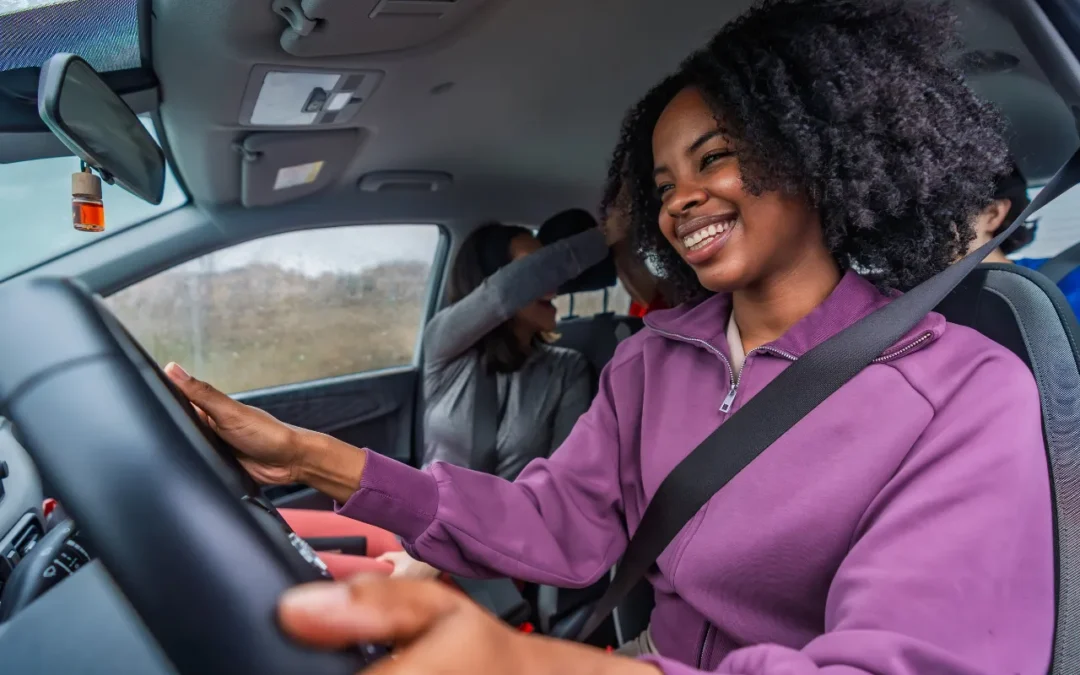
A long drive can make your body feel stiff because you sit in one position, your joints move less, and your muscles stay slightly braced for hours. Your hips stay bent, your glutes shut down, your upper back rounds, and your neck holds your head forward. Even if you feel fine during the drive, your body often pays for it later.
You can feel better faster with a few smart habits during the drive, a simple reset right after you arrive, and the right timing for a massage.
Why does your body stiffen up in the car?
Your body likes movement. A car seat asks the opposite.
Your hip flexors stay shortened, and your hamstrings stay under tension because your knees stay bent. Your glutes stop doing their job because you are not pushing through your feet the way you do when you walk. Your upper back and chest tighten because many people lean forward slightly without noticing. Your neck tightens because your eyes stay fixed on the road, and your head drifts forward.
If the drive includes stress, traffic, or constant focus, your nervous system stays alert. That can keep your shoulders raised and your jaw tight. This is why stiffness after a drive often feels like a full-body issue, not just a sore lower back.
The swelling piece most people ignore
Some people feel stiff and notice puffy ankles, or their shoes feel tighter after driving. Sitting for hours slows the calf muscle pump, which helps move blood and fluid back up the legs. Gravity then makes your lower legs feel heavier.
Mild ankle swelling after a long drive is common. Swelling in one leg, warmth, redness, strong calf pain, chest pain, or shortness of breath are not normal. In that case, do not book a massage until a clinician rules out a blood clot.
What to do during the drive so you do not arrive stiff.
You do not need a complicated plan. You need movement in small doses.
- Stop every 90 to 120 minutes if possible. Walk for three to five minutes.
- Do ankle pumps while driving. Lift your toes, then lift your heels. Repeat a few times at red lights or safe moments.
- Keep your shoulders down. Check them every time you look in the mirror.
- Relax your grip on the steering wheel when you can. Many people clamp without noticing.
- Adjust your seat so your hips sit comfortably back and your head stays more upright. Small seat changes matter.
Hydration helps too. Dehydration can make you feel stiffer and more tired. Sip water during the drive and avoid making coffee your only source of fluids.
A five-minute reset when you arrive
Do this before you collapse on the couch.
- Walk for five to ten minutes at an easy pace.
- Do a gentle hip flexor stretch on each side.
- Open your chest by placing your hands behind your back and lifting gently.
- Rotate your neck slowly left and right, then look up and down without forcing the range.
The goal is to tell your body it can move again. You should feel looser, not stretched hard.
When does a massage help most after a long drive?
Massage can help in two main ways.
After the drive, when you feel locked up
This is the most common choice. A session later that day or the next day can relax tight hips, calves, and shoulders, and it can calm the nervous system after long hours of focus. If you also feel leg heaviness, gentle work on calves and feet can feel especially helpful.
Before the drive, when you want to prevent tightness
A lighter session one to two days before travel can help you start the trip with less baseline tension. If you go too deep right before a long drive, you might feel sore while sitting, so keep pre-trip sessions more comfortable and less intense.
If you want a steady option that supports the whole body after travel, a full-body massage in Mishawaka often makes sense, especially when stiffness shows up in both the lower body and the upper back.
Which massage styles fit post-drive stiffness
Different styles fit different bodies. The best choice depends on what you feel.
Swedish style relaxation
This works well when your stiffness feels general, and your nervous system feels keyed up. It helps you settle and can make your body feel lighter.
Targeted therapeutic work
This fits when you know your problem areas, like hips, lower back, neck, or shoulders. The therapist can spend more time where you lock up most.
Deep tissue used with control
Deep work can help tighten the glutes, calves, and upper back, but it should remain intentional. Too much pressure on already irritated areas can make you feel worse the next day. A good session uses deeper work, where the tissue actually feels dense, and keeps pressure lighter where you feel tender.
Gentle work for swelling and heavy legs
If you arrive with puffy ankles, heavy legs, or tight sock marks, gentler techniques usually feel better than intense pressure. Movement and hydration still matter here, and massage should support comfort, not chase intensity.
Herbal Stones can tailor a session around travel stiffness, especially when you want your hips, legs, and upper body to feel balanced again.
How long should the session be
A 60-minute session works well if your main goal is to loosen hips, calves, and upper back.
A 75- to 90-minute session works better if you want full-body relaxation plus extra time on the areas that tighten most from driving.
If you book a full-body massage in Mishawaka, ask for focused time on your hips and upper back. Those areas often drive the stiffness you feel after sitting for hours.
Simple habits that make results last longer
Massage works better when you change what happens between sessions.
- Take a short walk later that day.
- Drink water steadily, especially if you drive in the heat or drink a lot of caffeine.
- Avoid heavy lifting right after a long drive if your back feels tight.
- Use warmth for 10 to 15 minutes if you feel stiff later, especially in the hips and upper back.
- Go to bed on time. Sleep helps your body hold the reset.
A smarter way to recover from road trips
You do not need to accept stiffness as the price of travel. Break up the drive, move right in, and book a massage at the right time for your body. If you want support that targets travel stiffness from head to toe, a full body massage in Mishawaka can help you reset without turning recovery into a whole project.
If you want to book a session that aligns with your next drive and your problem areas, Herbal Stones can help you choose a time and session length that fits your schedule and helps your body feel normal again.
Text Us